
Learn the Rhythm.
Book the Moment.
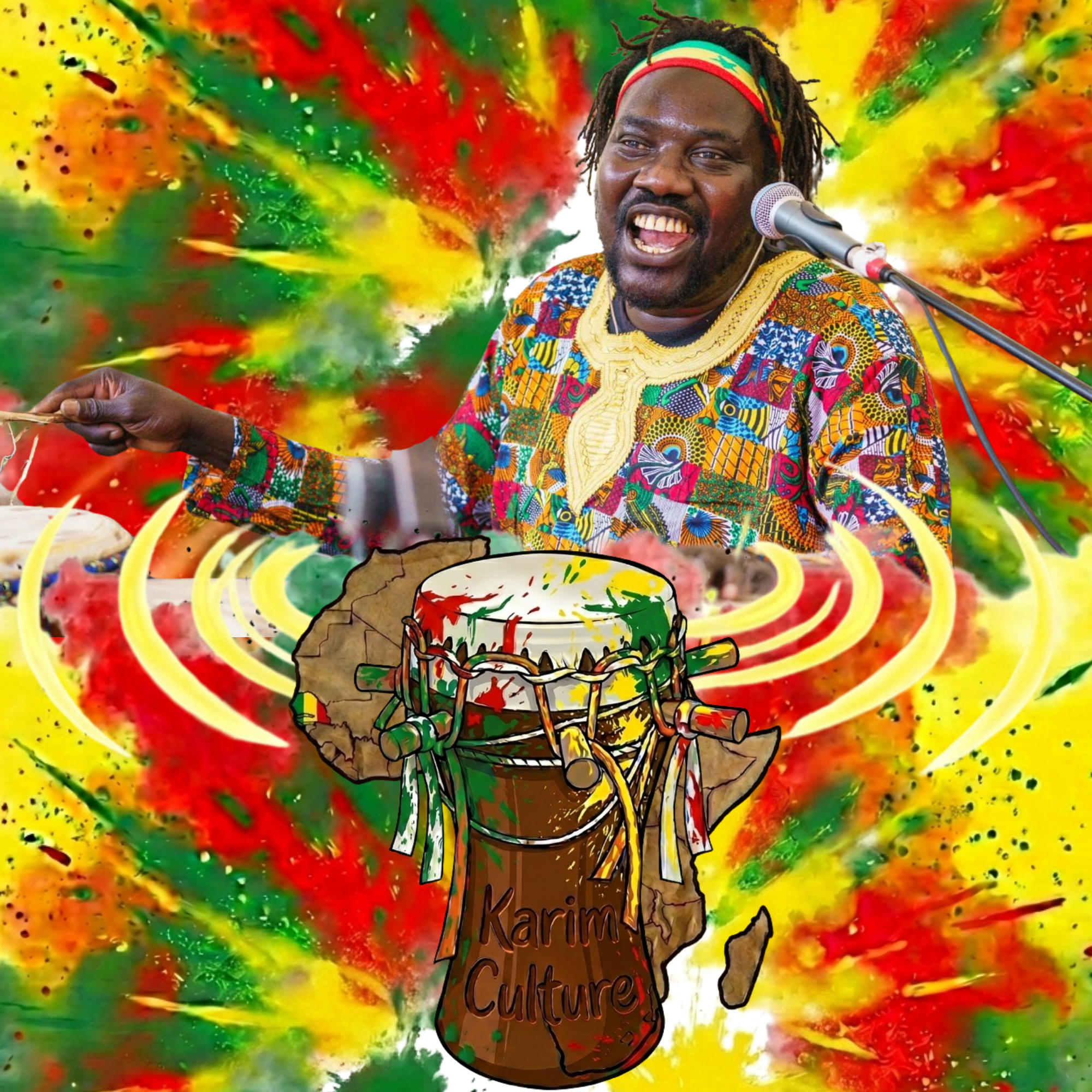
Private lessons, group workshops and ceremonial performances — with Karim Mbaye, master Sabar drummer and West African cultural educator based in Manchester, UK.
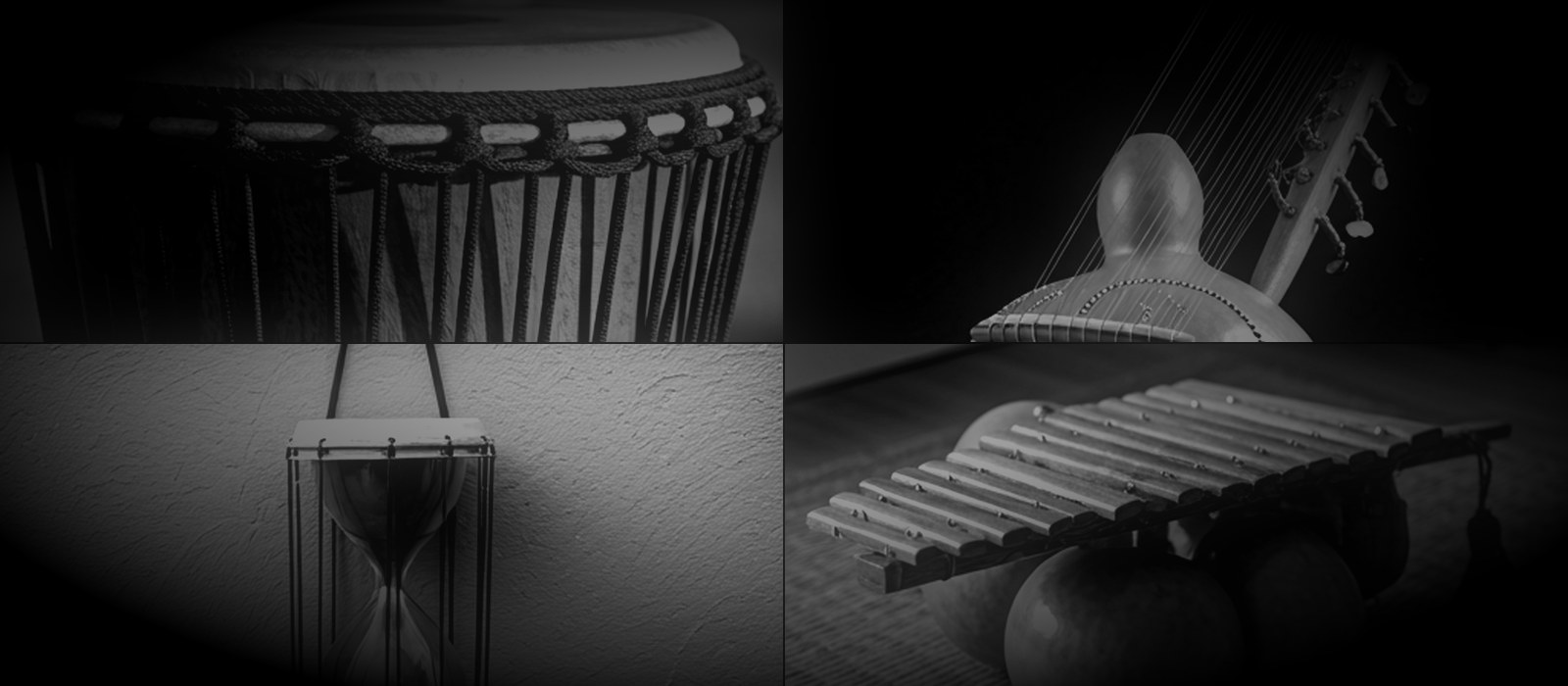
Djembe · Kora · Tama · Balafon
The Instruments of West Africa
Learn the
Rhythm.
Book the
Moment.
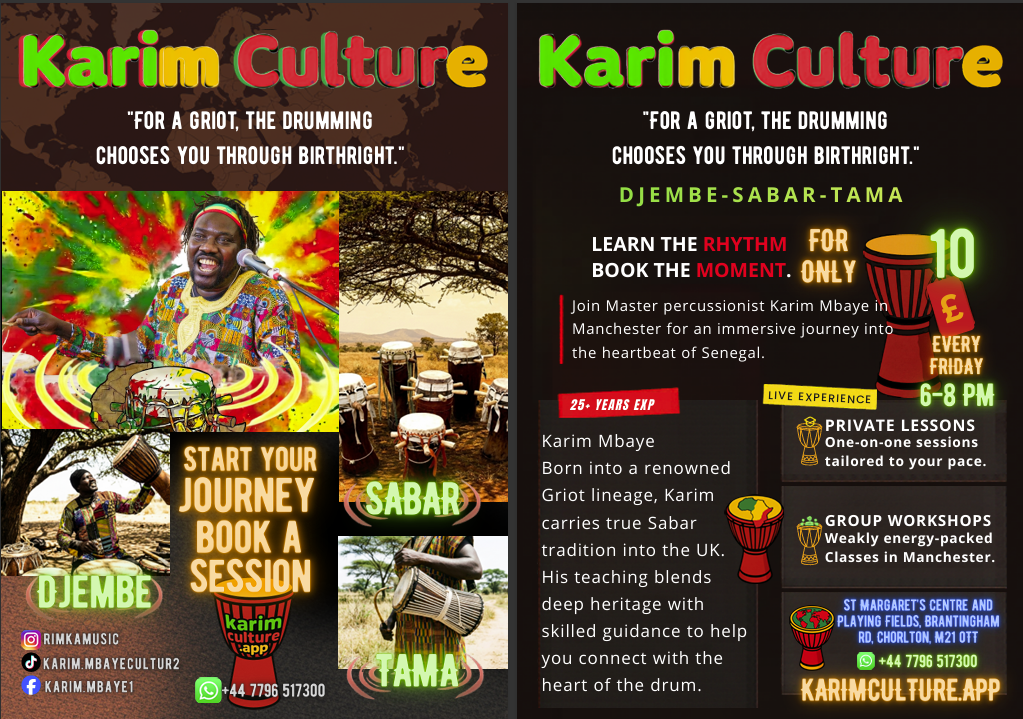
Private lessons, group workshops, and ceremony bookings — every session tailored to carry the tradition forward. Take the leaflet. Share it. Start your journey.
Instruments of the West
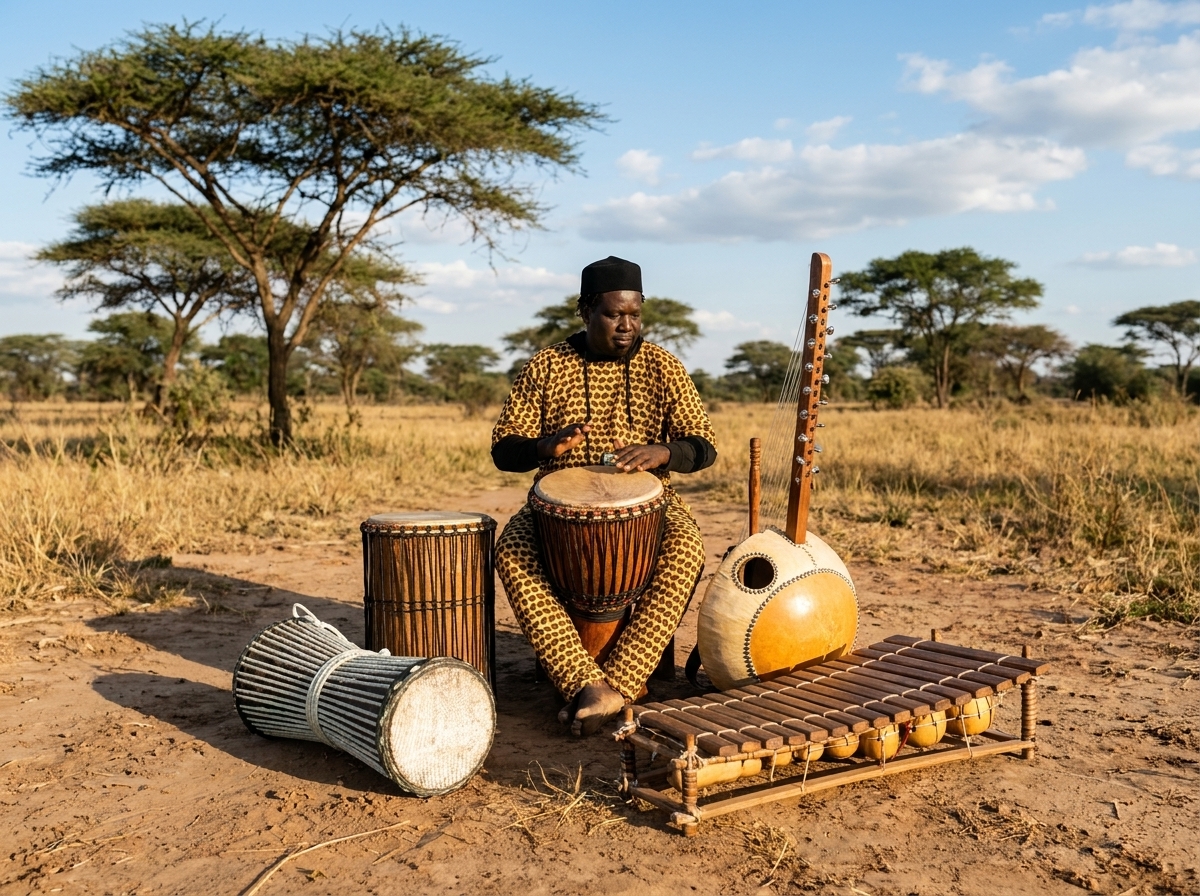
Each instrument is a vessel of history, a voice of the ancestors, and a pulse for the community. Karim teaches them all.
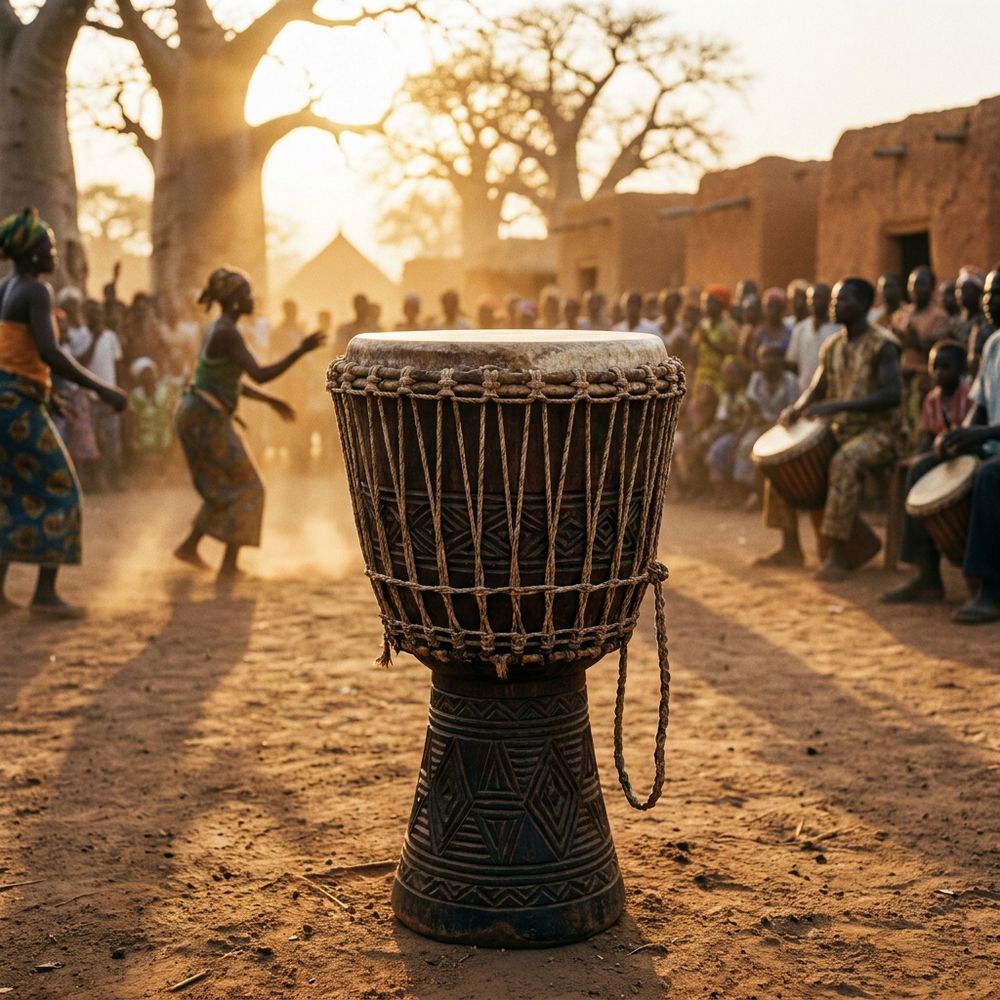
Djembe
The "healing drum." Its goblet shape creates a range of tones — from deep bass to sharp slaps — calling people together in unity.
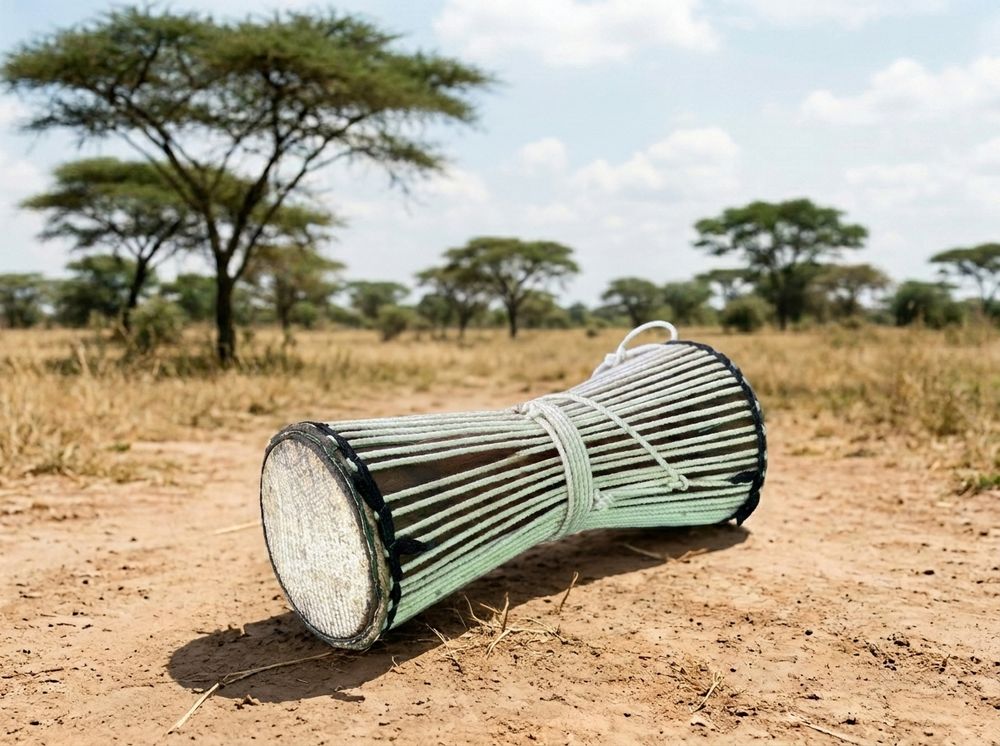
Tama
calendar_monthThe "talking drum" that mimics human speech. Squeezed under the arm, it tells ancient stories through pitch.
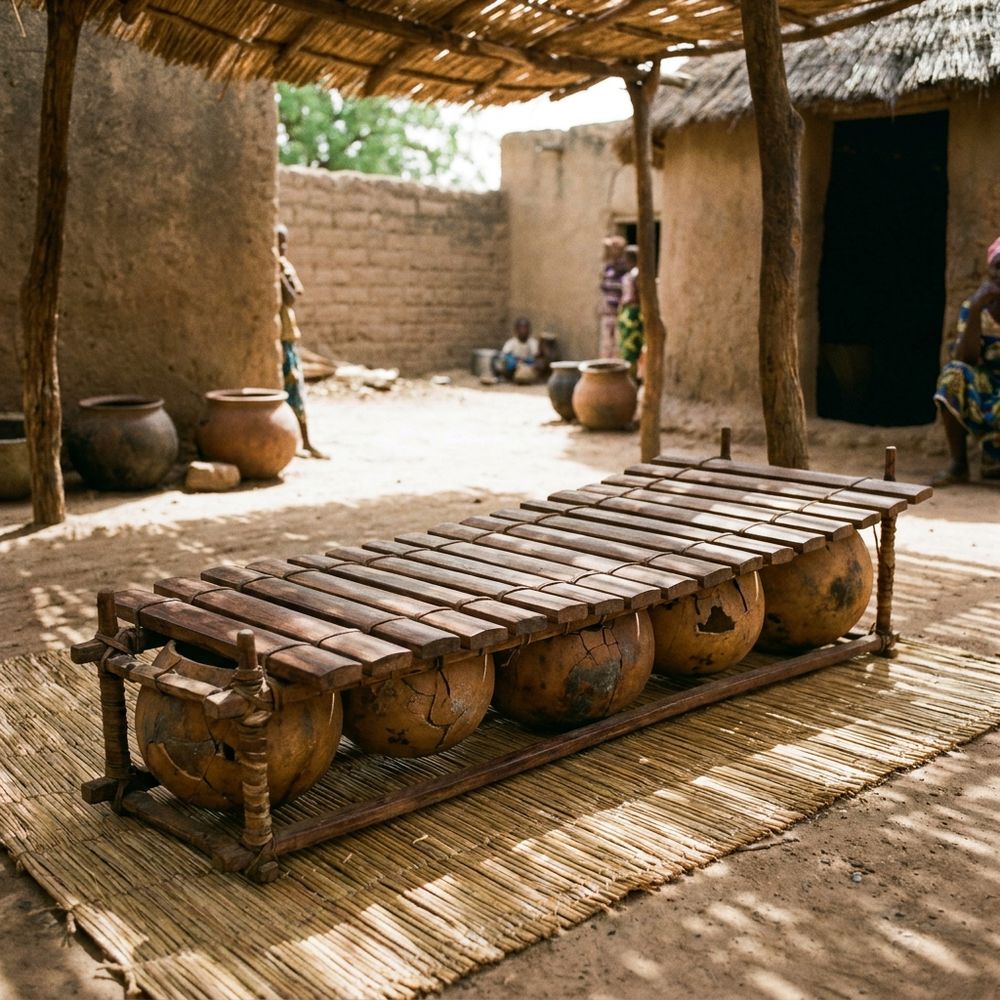
Balafon
calendar_monthResonating through dried gourds — the melodic ancestor of the xylophone carrying the soul of the savannah.
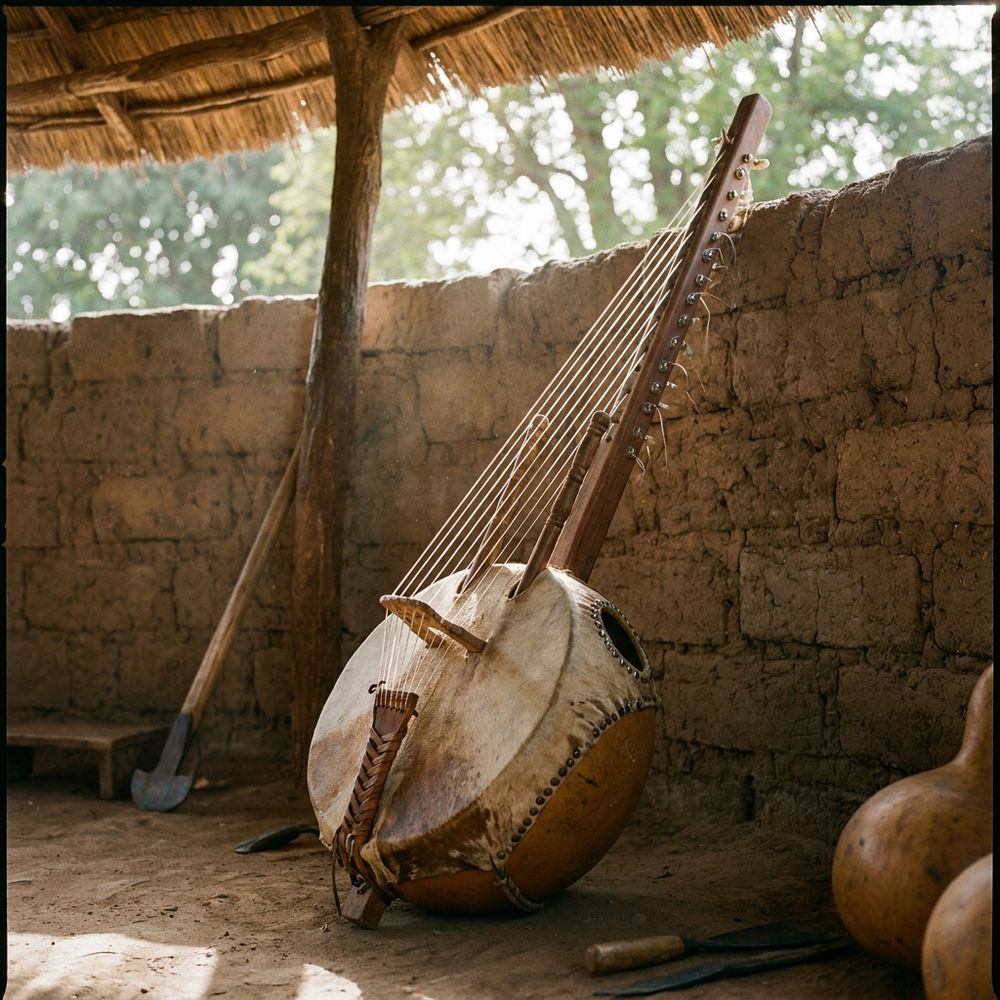
Kora
calendar_monthThe "21-Stringed Historian." A half-calabash gourd resonator strung with 21 antelope-hide strings across a notched bridge — each note a chapter in Mandinka oral history. Introspective, melodic, ethereal.
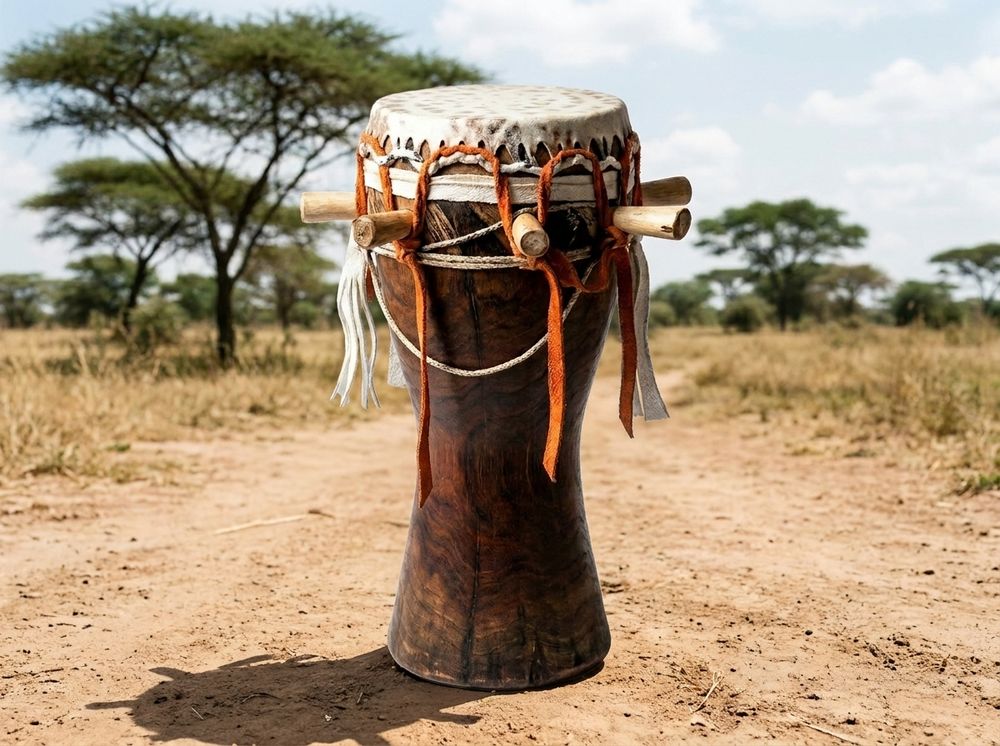
Sabar
calendar_monthThe thunder of Senegal. The open hand delivers a warm, resonant bass; the galan stick produces a sharp, penetrating crack. Together they form a complete sonic language — the rhythmic engine of every Wolof ceremony.
Book Your Session
Whether you are a complete beginner, a school, or organising a celebration — Karim tailors every experience to you. Choose the session that fits.
Weekly Group Class — Manchester
St Margaret's Centre, Brantingham Rd, Chorlton, M21 0TT
Per Session
£10
Group · Up to 10
Private Lesson
One-to-one tuition with Karim. Any level, any instrument. At the Pyramid Centre in Warrington or online via video call.
- check_circle All levels — beginner to advanced
- check_circle Sabar, Djembe, Tama, Kora, Balafon
- check_circle In-person (Warrington) or online
- check_circle Flexible scheduling
Group Workshop
For schools, community centres, universities and private groups. A hands-on cultural experience with real drums — up to 15 participants.
- check_circle Up to 15 participants
- check_circle Schools, community & corporate
- check_circle Drums provided on request
- check_circle Warrington, Liverpool & surrounding areas
Ceremony & Events
Live drumming and performance for weddings, naming ceremonies, festivals, graduations and corporate events. Authentic. Unforgettable.
- check_circle Weddings & naming ceremonies
- check_circle Festival & stage performances
- check_circle Graduations & cultural events
- check_circle Solo or full RIMKA band
Not Sure Which to Choose?
Tell Karim what you have in mind and he'll come back to you within 24 hours.
How It Works
Three steps from first enquiry to your first beat.
Choose Your Session
Private lesson, group workshop or ceremony. Browse the options above or just message Karim if you're not sure.
Send Your Enquiry
Use the form above, email, or WhatsApp. Karim will confirm availability and details within 24 hours.
Begin Your Journey
Show up, pick up the drum, and let the rhythm do the rest. Every session is an experience you carry with you forever.
BARSEA Award Winner
Recognised by the British Academy for excellence in cultural engagement and education.
Griot Heritage
Karim comes from a griot family. What he teaches is not technique alone — it is living tradition.
Pyramid Centre, Warrington
Regular in-person sessions at a dedicated venue. Online lessons also available worldwide.
Africa Oyé & BBC
Performed at Africa Oyé Liverpool, featured on BBC and international stages across Europe.
Seven Pillars of the Urban Griot
How West African tradition lives, breathes and travels — from Senegal to Liverpool, from ancient courts to community halls.
A Drum That Speaks
In the West African tradition, a drum is never merely an instrument — it is a vessel for an ontological reality. While Western music is often categorised as entertainment, here it functions as a living oral archive.
The Griot is not a performer but a walking library — guardian of social memory, tasked with maintaining the continuity of a lineage through the strike of a skin and the cadence of a voice.
In societies where history was traditionally sung rather than written, a rhythm serves as a coded language — documenting the rise and fall of empires, the branches of family trees, and the collective values of a community.
The music is the "social glue" that binds the past to the present — ensuring that even in the face of mass migration and political upheaval, the history of the people remains audible and vibrant.
More Than a Musician — a Hereditary Historian
In the Wolof tradition of Senegal, the Griot — or Gewel — occupies a sacred hereditary station. These families are professional historians, genealogists, and storytellers. They narrate ancient epics and mediate current social discourse, ensuring that community identity survives the transit of time.
In the modern era, this has evolved into the Urban Griot — figures like Karim Mbaye who take the responsibilities of the royal court and adapt them to the global stage, acting as cultural ambassadors bridging ancestral knowledge and contemporary experience.
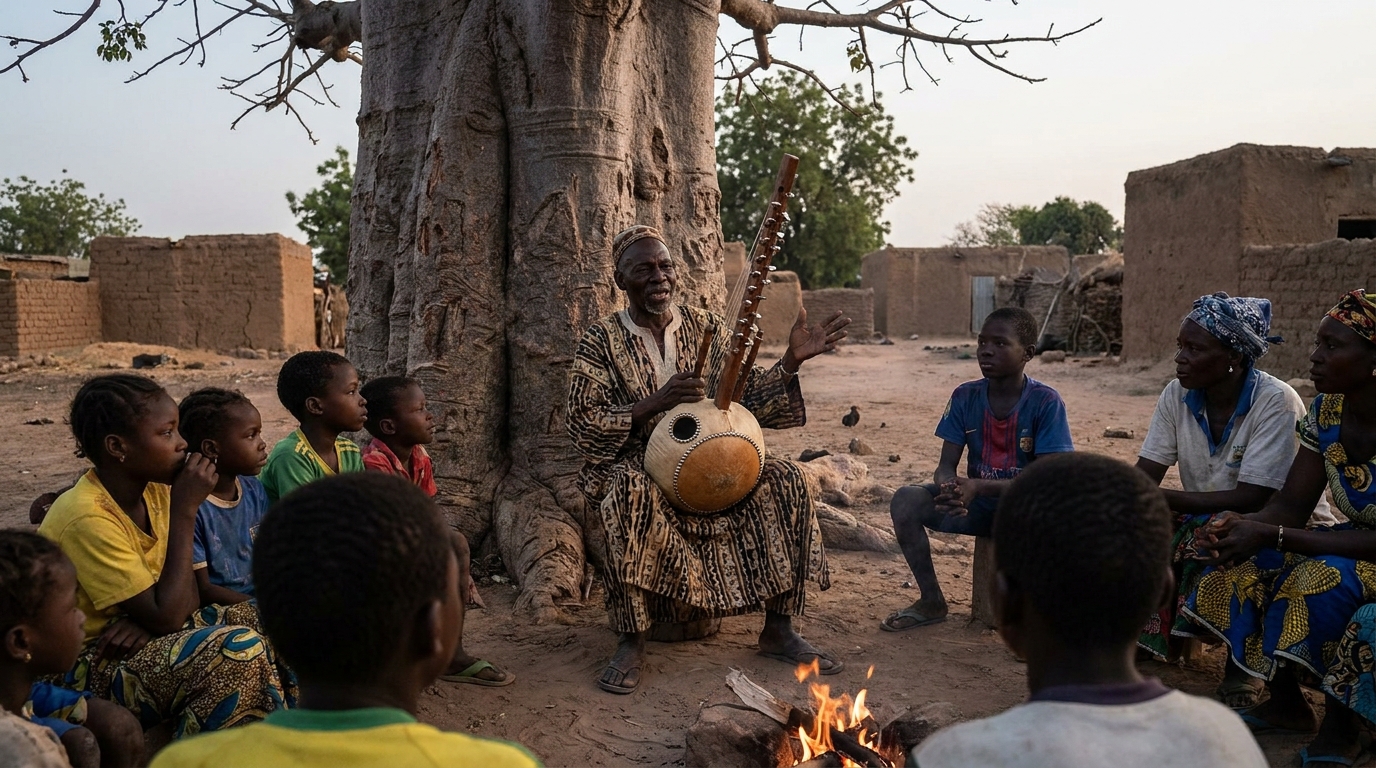
For a griot, the drumming chooses you through birthright. Senegalese children are born to the beat of the drum, we heal with the drum and it is so embedded into our culture it is now in modern music.
Karim Mbaye
Warrington Guardian
Sabar: When Percussion is a Literal Language
The Sabar drum is the rhythmic heart of the Wolof people — played with one hand and a thin wooden stick called a galan. Its rhythms correspond directly to the syllables of the Wolof language. The drum does not just provide a beat; it possesses a narrating voice.
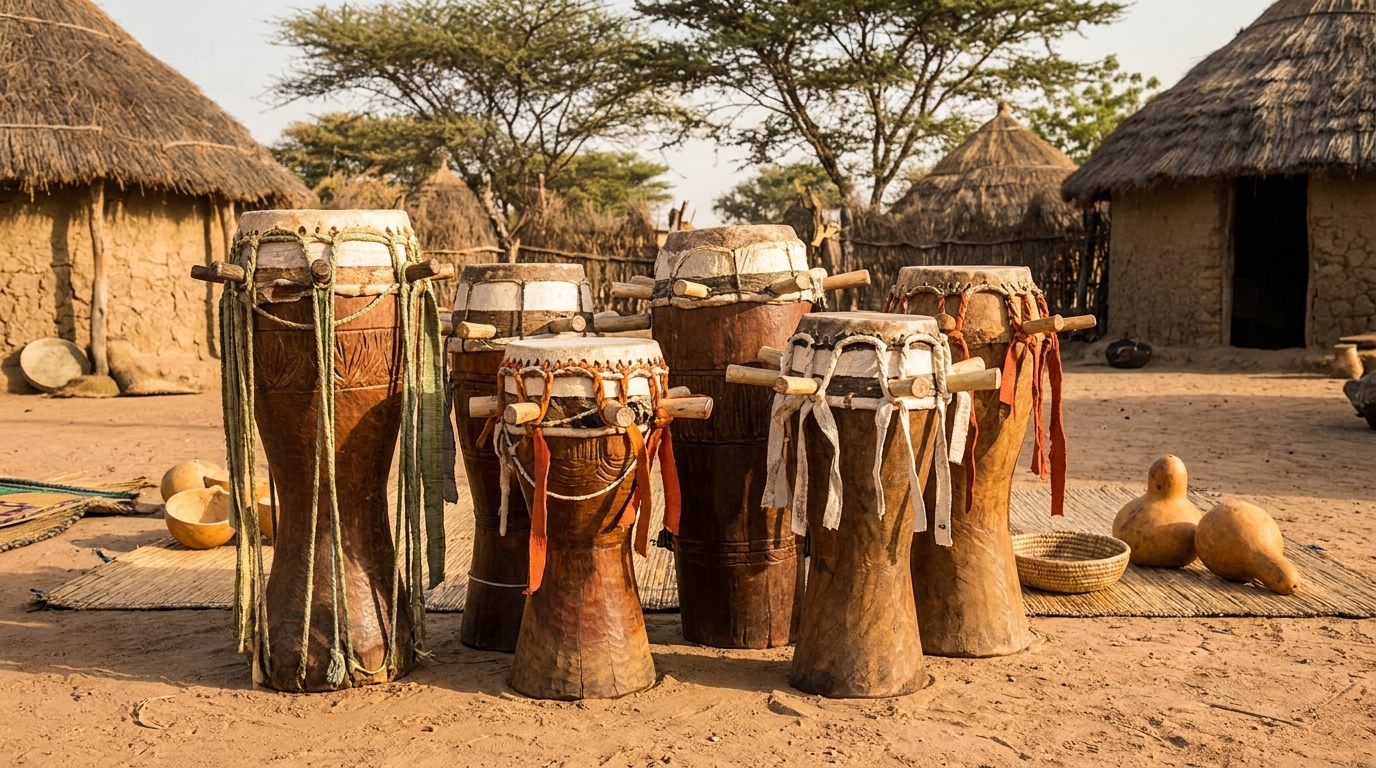
Nder
The Caller · Leader
Tallest and most slender of the family. Its sharp, penetrating crack cuts through the ensemble — signalling transitions, opening ceremonies and directing the dancers.
Mbëng-mbëng
The Backbone · Support
Medium-height drum with a bright, focused mid-tone. Provides the primary rhythmic foundation upon which all lead patterns are built — every ensemble rests on its shoulders.
Tungune
The Pulse · Core Bass
Shorter and wider, producing deep, low, grounding tones. The heartbeat beneath everything — felt in the chest before it is heard by the ear. Anchors the interlocking rhythm.
Gorong Yegul
The Storyteller · Narrator
Medium height with a bright, expressive tone. Carries the most intricate linguistic patterns — the drum that narrates the ceremony's arc and communicates in full Wolof rhythmic sentences.
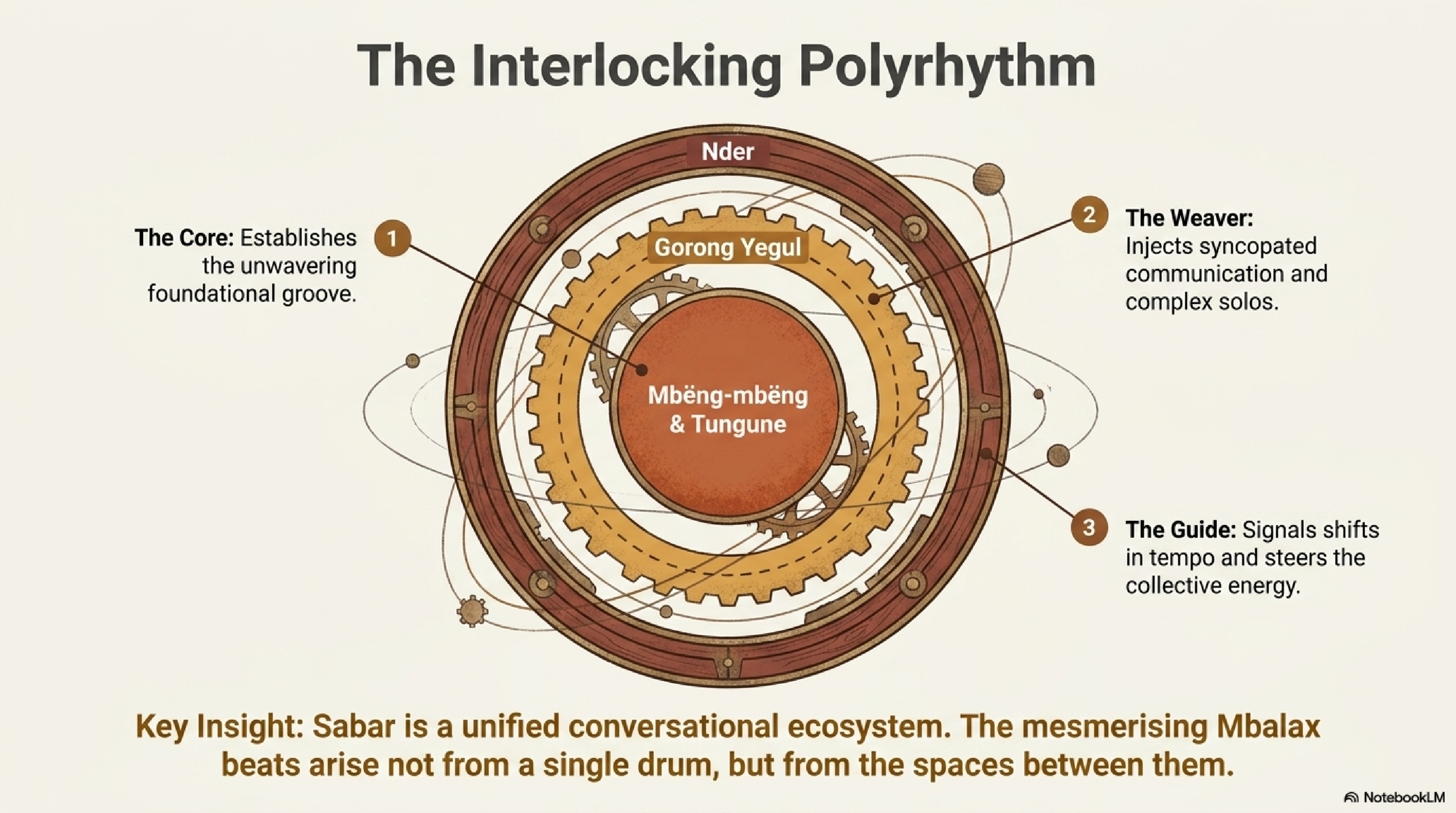
Interlocking Polyrhythm · The Space Between Drums
"Sabar is a unified conversational ecosystem. The mesmerising Mbalax beats arise not from a single drum, but from the spaces between them."
Core — Mbëng-mbëng & Tungune establish the unwavering foundational groove.
Weaver — Gorong Yegul injects syncopated communication and complex solos from the middle layer.
Guide — Nder leads from the outer ring, signalling shifts in tempo and steering collective energy.
The Great Democratisation
Once reserved for hereditary griot families, this knowledge is now open to all. Through Agida African Arts, Karim has taken it to National Museums Liverpool, the Whalley Range Celebrate Festival (28th year), schools and community centres across the North West.
Hereditary Duty
Royal courts of Senegambia — knowledge passed father to son, by birthright only.
Global Migration · 2005
Karim arrives in the UK, bringing the living archive across the Atlantic.
Public Pedagogy
Workshops, university residencies and festival stages open the tradition to anyone who wants to learn.
Cultural Safeguarding
BARSEA recognition confirms the tradition as living heritage — not museum piece.
"The survival of these sacred traditions depends on cross-cultural collaboration and public participation." — The British Academy
Greater Senegambia
Senegal, The Gambia, Guinea-Bissau, Mali and Guinea share one cultural root — the Empire of Mali (1250–1470). Colonial borders and imposed languages fragment what music refuses to divide. The akonting, a Jola instrument from this region, is the direct ancestor of the New World banjo — proof that these rhythms already crossed oceans.
Music achieves regional integration where political diplomacy repeatedly fails.
The Liverpool–Sabar Synthesis
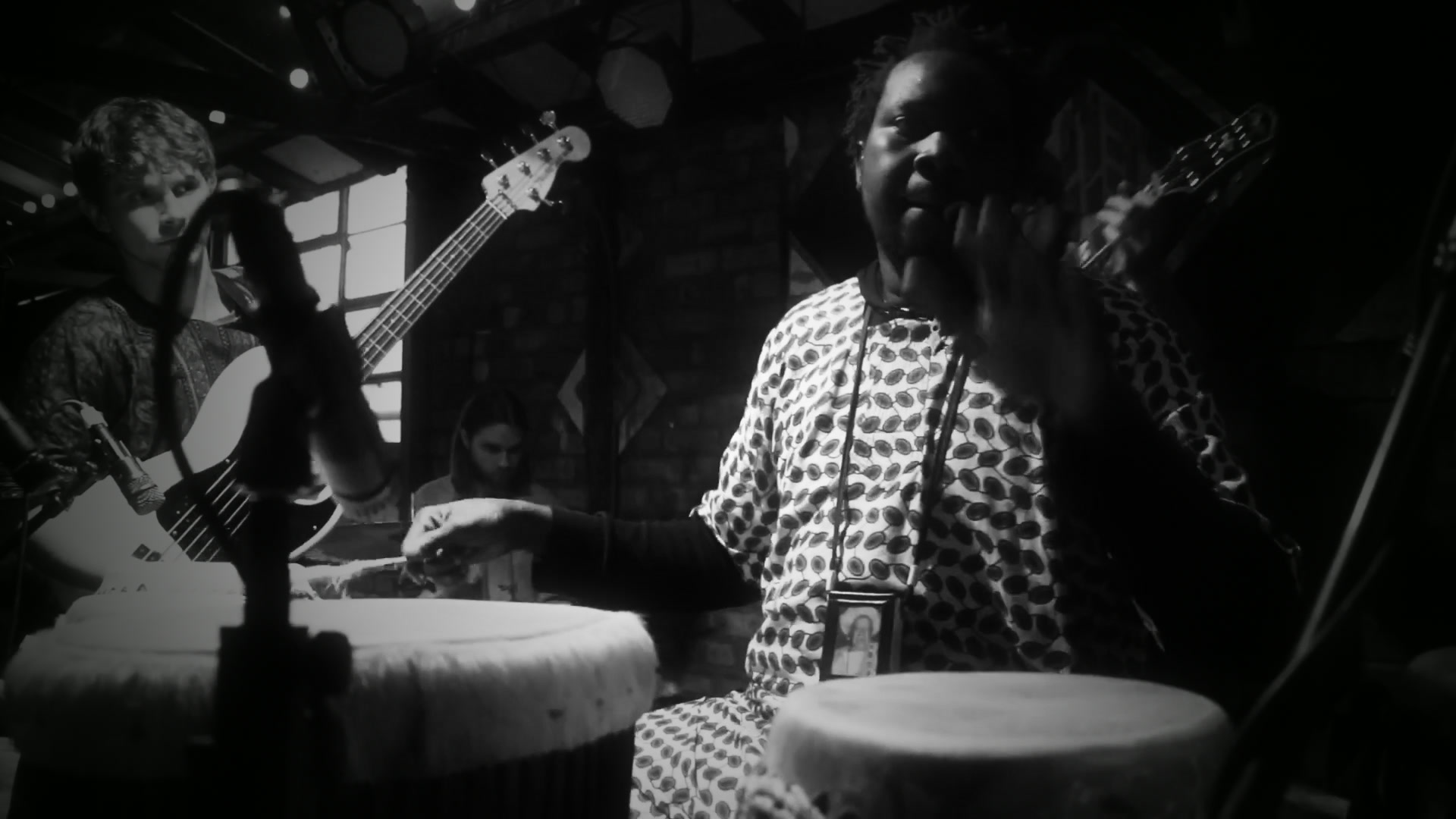
Liverpool's port history makes it a natural hub for West African music. Here Mbalax — the high-octane fusion of Sabar with jazz, soul and pop — finds new ground. RIMKA brings together musicians from Senegal, Mali, Nigeria and Ghana. Karim played on Baaba Maal's Missing You at Abbey Road and shared stages with Ray Charles in Paris.
The streets of Liverpool and the studios of London connect directly to the ancient rhythms of the Senegalese hinterland.
The Rhythm of Resilience
The Urban Griot is the ultimate guardian of resilience. In an era marked by mass migration and the fragmentation of traditional societies, these practitioners ensure that historical richness is not lost to time.
They adapt ancient hereditary roles to modern urban environments, proving that the strike of a drum is more than sound — it is a manifesto of survival.
"In a world that is increasingly digital and fragmented, what can we learn from a culture that trusts its most vital history to the strike of a drum and the memory of a single voice?"
Perhaps it is that true history is not found in the archives of the state — but in the shared heartbeat of a community that refuses to be forgotten.